Sanatan Dharma · Divine Avatars

॥ श्री विष्णवे नमः ॥

THE DASHAVATARA

The Ten Divine Avatars of Bhagwan Vishnu

Across sacred Hindu traditions, the avatars of Bhagwan Vishnu tell stories of protection, courage, wisdom and the restoration of dharma. Each form belongs to a rich narrative world, inviting us to reflect on responsibility, compassion and the balance of life.

Ancient narratives Ten recognised forms One enduring reflection on dharma

Understanding the tradition

What does Dashavatara mean?

The Sanskrit expression Dashavatara combines dasha, meaning ten, and avatara, commonly understood as a divine descent or manifestation. In many Vaishnava traditions, it refers to ten celebrated forms associated with Bhagwan Vishnu.

Their stories unfold in different settings: primeval waters, the churning of the cosmic ocean, the protection of a devoted child, the humility of a gift-seeking mendicant, the life of an ideal king, and the wisdom of a divine teacher. Together, these narratives explore how dharma can be protected or restored when order is threatened.

Hindu traditions do not always present an identical list or interpret every avatar in precisely the same way. Dashavatara is best approached as a significant tradition with rich textual, regional and devotional variations.

यदा यदा हि धर्मस्य ग्लानिर्भवति भारत।
अभ्युत्थानमधर्मस्य तदात्मानं सृजाम्यहम्॥

परित्राणाय साधूनां विनाशाय च दुष्कृताम्।
धर्मसंस्थापनार्थाय सम्भवामि युगे युगे॥

“Whenever dharma declines and adharma rises, I manifest Myself. For the protection of the good, the destruction of wrongdoing, and the re-establishment of dharma, I appear age after age.”

Bhagavad Gita · 4.7–4.8

A note on the ninth avatar

This page follows a widely recognised list that places Buddha ninth. Other traditions place Balarama in that position. Both arrangements should be understood in their respective contexts rather than treated as a single universally accepted sequence.

The sacred directory

Ten Avatars. Ten Remarkable Stories.

Begin with a brief introduction to each avatar, then continue to the corresponding story and its traditional significance.

मत्स्य The primal waters

AVATAR 01

Matsya

मत्स्य

The fish form associated with the great flood, Vaivasvata Manu, and the preservation of life and sacred knowledge in traditional accounts.

READ THE STORY
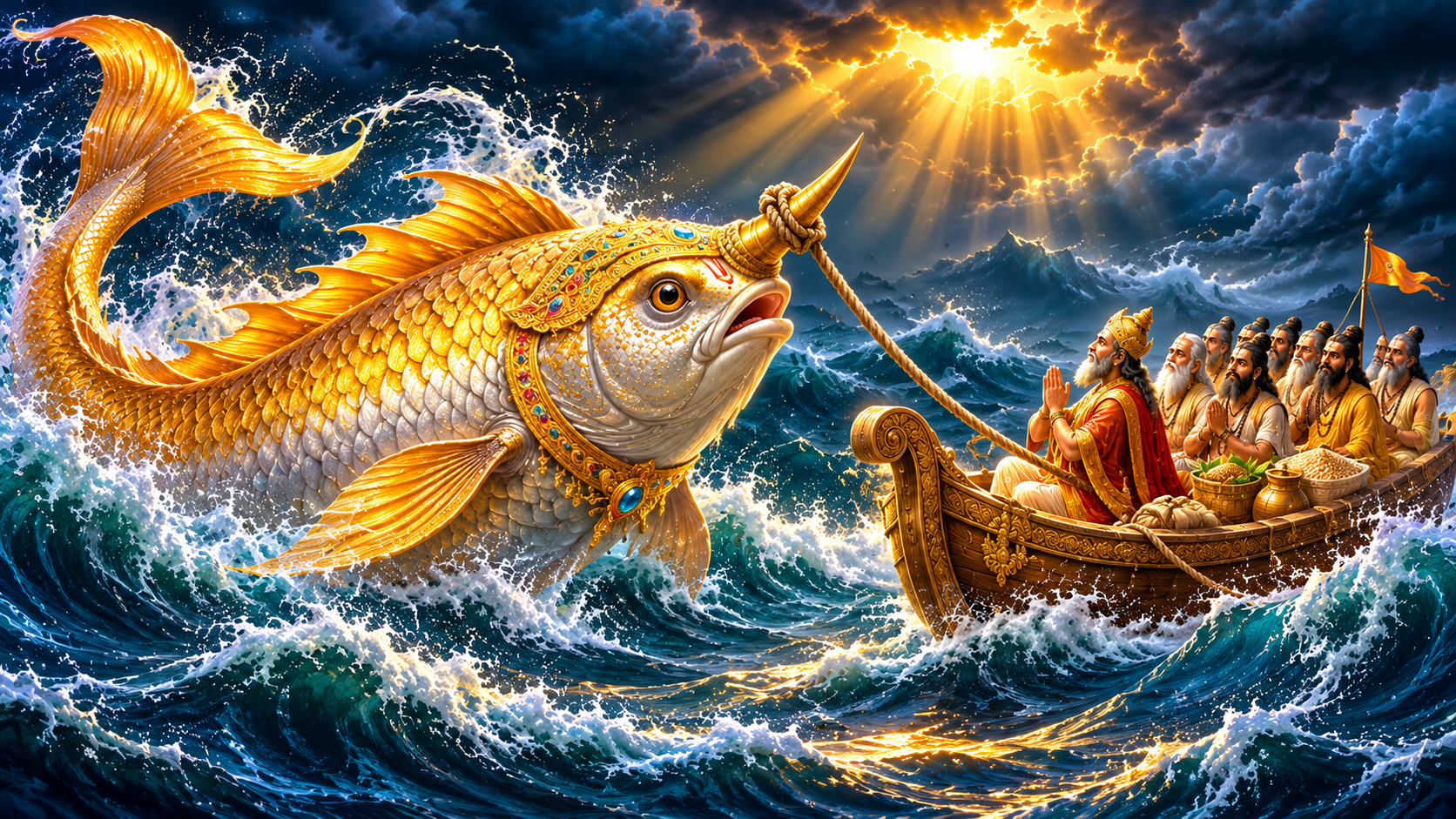
Matsya avatar guiding the sacred ark through the cosmic flood
कूर्म The cosmic support

AVATAR 02

Kurma

कूर्म

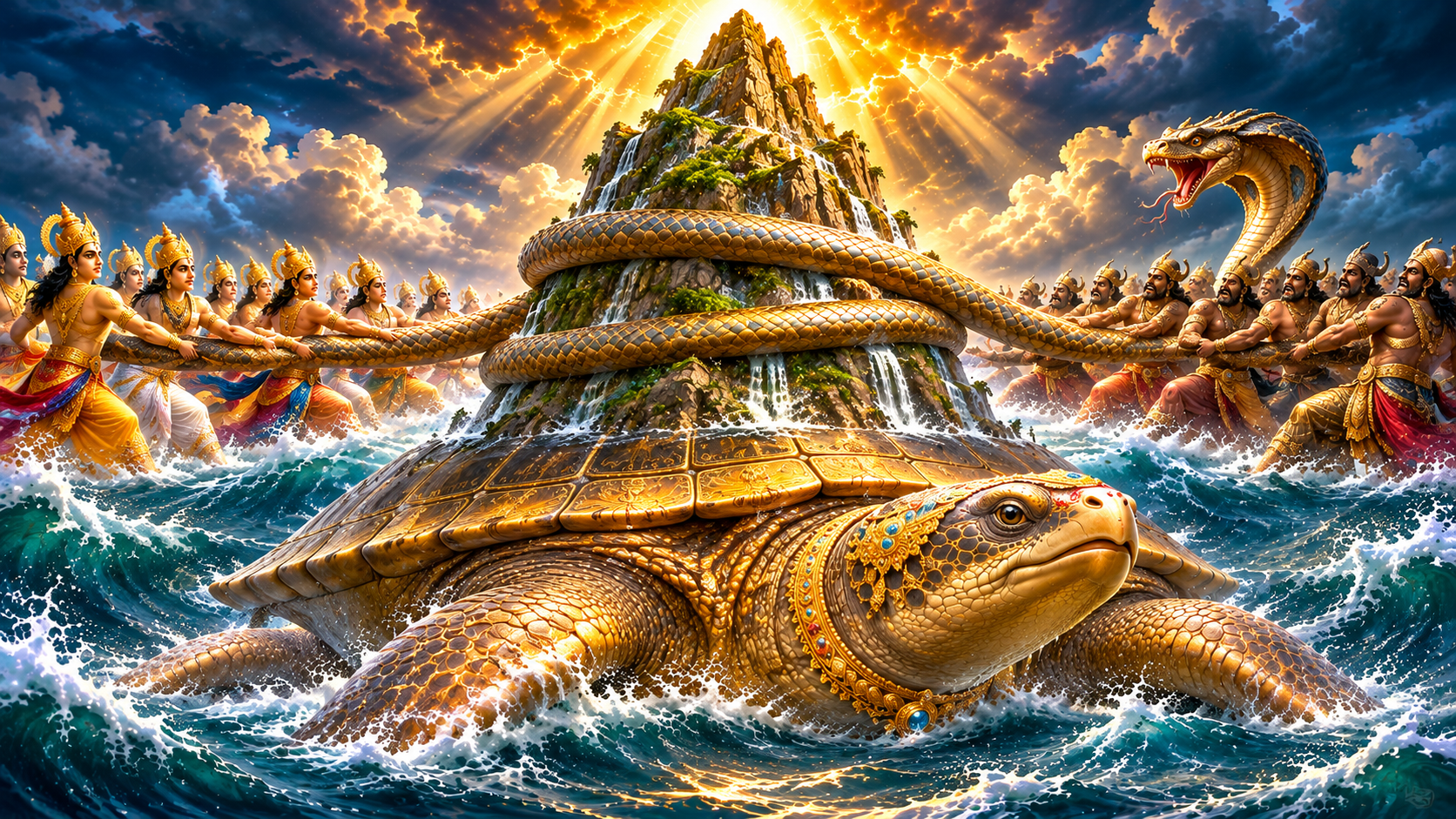
The tortoise form that supports Mount Mandara during the churning of the ocean, a celebrated episode in Puranic literature.

READ THE STORY
Bhagwan Kurma supporting Mount Mandara during Samudra Manthan
वराह The earth restored

AVATAR 03

Varaha

वराह

The boar form that raises the Earth from the cosmic depths and confronts Hiranyaksha in the Bhagavata Purana's account.

READ THE STORY
Bhagwan Varaha lifting the Earth from the cosmic waters
नृसिंह The fearless protector

AVATAR 04

Narasimha

नृसिंह

The man-lion form whose appearance protects Prahlada and brings an end to the tyranny of Hiranyakashipu.

READ THE STORY
Lord Narasimha emerging from the pillar to protect Prahlada
त्रिविक्रम The three strides

AVATAR 05

Vamana

वामन

The dwarf Brahmin who asks King Bali for three paces of land, then reveals a cosmic form in the traditional narrative.

READ THE STORY
Lord Vamana meeting King Bali at the sacred yajna
परशु The warrior sage

AVATAR 06

Parashurama

परशुराम

The warrior-sage associated with the axe, the Bhrigu lineage, and narratives about unjust and abusive ruling power.

READ THE STORY
Bhagwan Parashurama, the divine warrior sage holding his sacred axe
श्रीराम The path of dharma

AVATAR 07

Shri Rama

श्रीराम

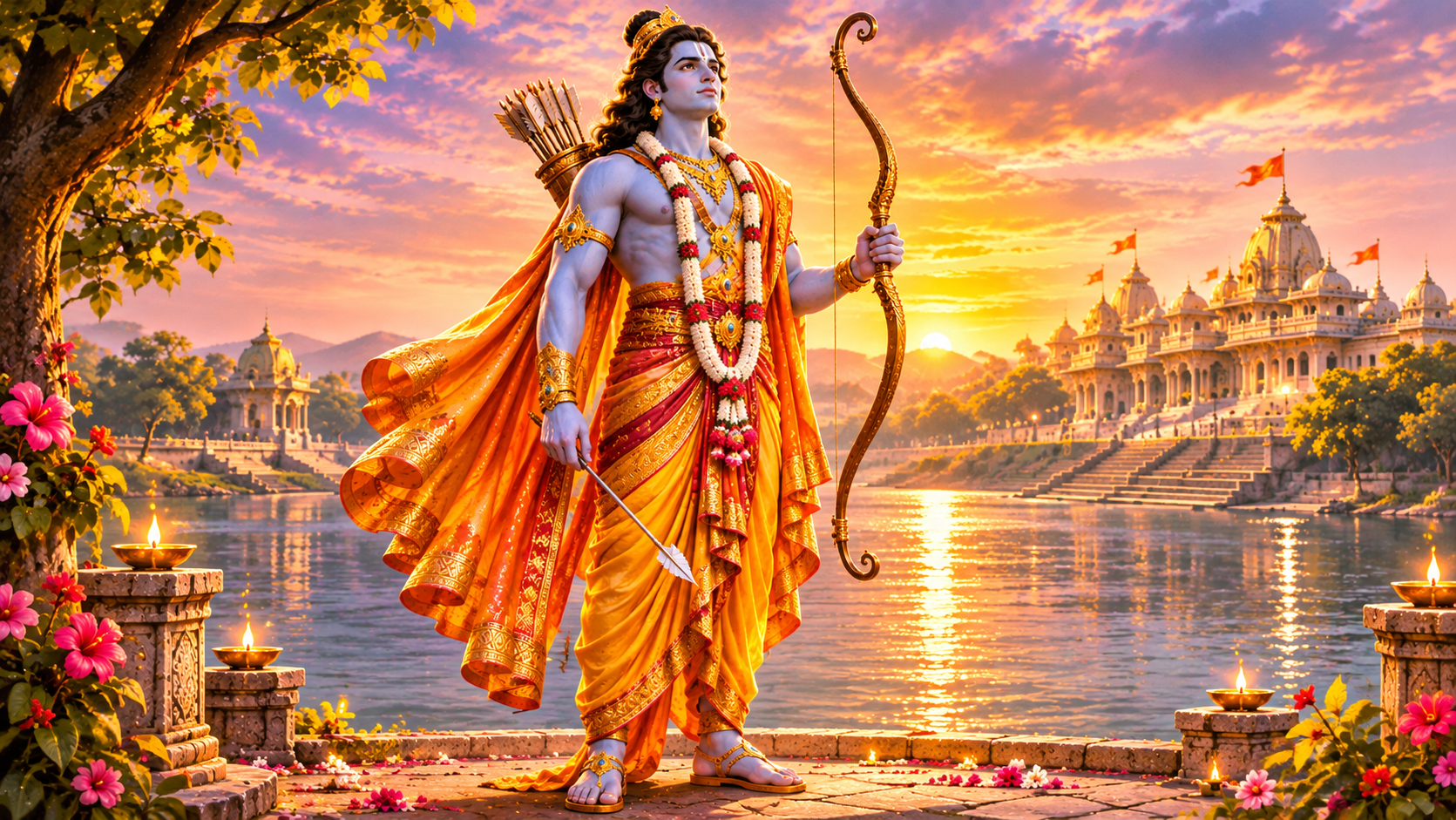
The prince of Ayodhya whose journey through exile, loss, duty and the conflict with Ravana is central to Ramayana traditions.

READ THE STORY
Full-body depiction of Shri Rama at the sacred Ayodhya temple ghat
श्रीकृष्ण Wisdom and devotion

AVATAR 08

Shri Krishna

श्रीकृष्ण

The beloved figure of many devotional traditions, associated with Vrindavan, the Mahabharata and the teaching of the Bhagavad Gita.

READ THE STORY
Shri Krishna in the golden light of Vrindavan
बुद्ध Contemplative wisdom

AVATAR 09

Buddha

बुद्ध

Included as the ninth avatar in many Hindu lists. Puranic presentations and interpretations differ, and Buddhist traditions understand the Buddha independently.

READ THE STORY
Buddha meditating beneath the Bodhi Tree at sunrise
कल्कि The promised renewal

AVATAR 10

Kalki

कल्कि

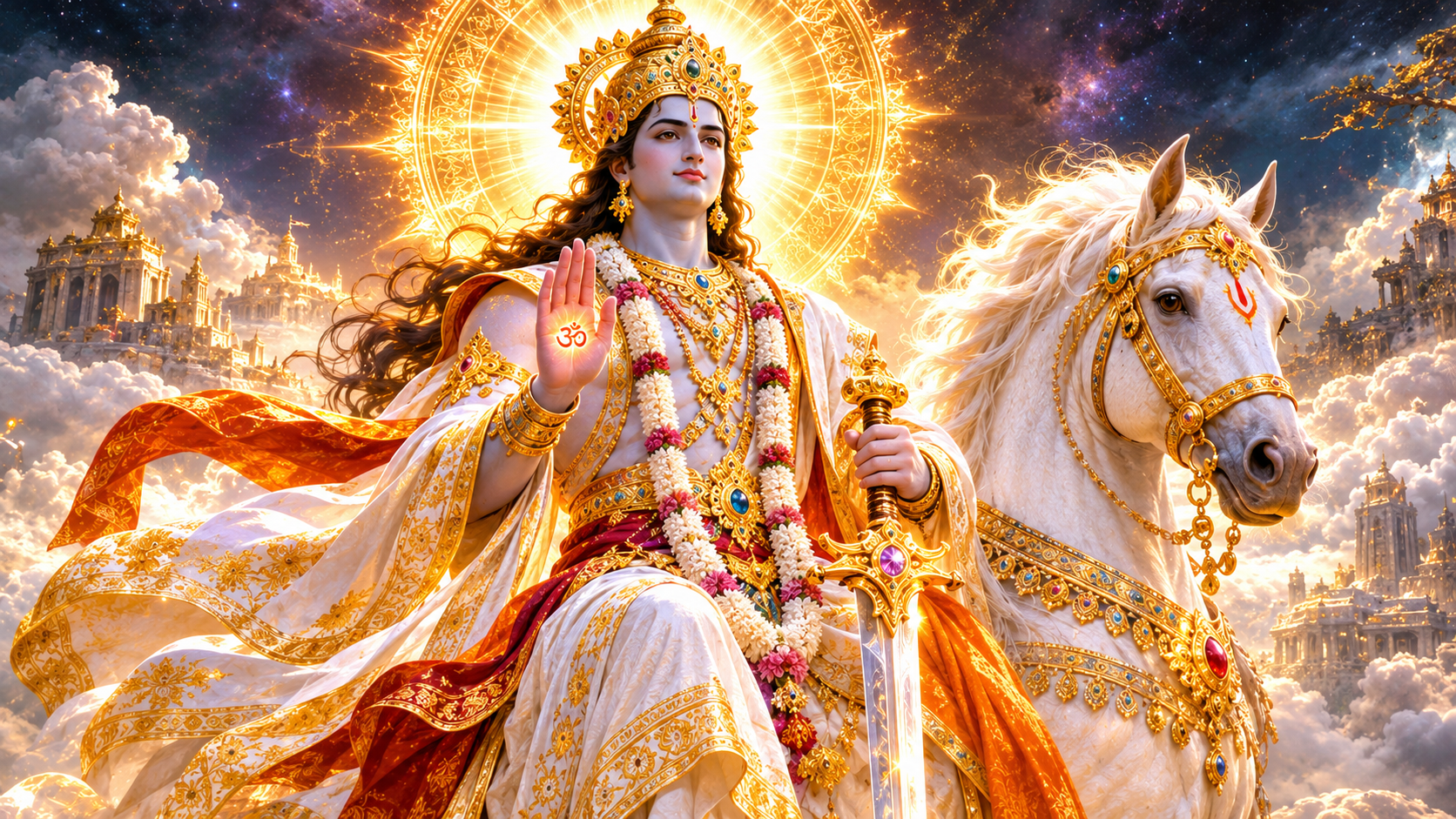
The future avatar expected in traditional Hindu accounts near the end of Kali Yuga, associated with the ending of widespread adharma.

READ THE STORY
Bhagwan Kalki in divine form beside his majestic white horse

The narratives behind the names

Explore the Divine Stories

These concise profiles introduce the traditional narratives and their spiritual or cultural significance. Individual texts and regional retellings may differ in emphasis and detail.

AVATAR 01

Matsya — The Divine Fish

मत्स्य अवतार

Traditional account. In the Bhagavata Purana's account of Matsya, the fish form encounters Vaivasvata Manu and warns him of an approaching deluge. Manu prepares for the coming waters, and Matsya guides and protects the vessel through the flood. Related accounts describe the preservation of living beings, seeds and sacred knowledge amid the dissolution.

Significance. The story is often read as a reflection on preservation, foresight and the protection of life and knowledge when the familiar world is threatened.

Selected references: Bhagavata Purana 1.3.15 and Canto 8, Chapter 24.

AVATAR 02

Kurma — The Cosmic Tortoise

कूर्म अवतार

Traditional account. During the churning of the ocean, the devas and asuras use Mount Mandara as the churning mountain. When the mountain requires support, Vishnu assumes the form of a tortoise and bears its weight. The wider narrative describes the churning and the emergence of extraordinary beings and treasures.

Significance. Kurma is associated with steadiness and support: the quiet foundation that allows a difficult undertaking to continue. The churning story also explores cooperation, rivalry and the consequences of ambition.

Selected reference: Bhagavata Purana 1.3.16; the ocean-churning narrative appears in Canto 8.

AVATAR 03

Varaha — The Divine Boar

वराह अवतार

Traditional account. In the Bhagavata Purana, the Earth is submerged in the cosmic depths. Vishnu takes the form of Varaha, raises the Earth and confronts the asura Hiranyaksha. The narrative presents the restoration of the world through a divine intervention suited to the crisis.

Significance. Varaha is associated with the recovery and protection of the Earth. The story invites reflection on the preservation of the world that sustains life.

Selected references: Bhagavata Purana 1.3.7 and Canto 3, Chapters 13 and 18–19.

AVATAR 04

Narasimha — The Man-Lion Protector

नृसिंह अवतार

Traditional account. Hiranyakashipu seeks supremacy and persecutes his son Prahlada, whose devotion to Vishnu remains steadfast. Narasimha appears in a form that is neither simply human nor animal, and defeats the tyrant within the unusual conditions of the narrative. The story is especially known for its dramatic confrontation and the protection of Prahlada.

Significance. Narasimha represents divine protection in the face of oppressive power and the persistence of devotion under persecution. The story holds a major place in Vaishnava devotional traditions.

Selected references: Bhagavata Purana 1.3.18 and Canto 7, Chapters 8–10.

AVATAR 05

Vamana — The Three Cosmic Strides

वामन अवतार

Traditional account. Vishnu appears as a young Brahmin mendicant at the sacrificial gathering of King Bali and asks for three paces of land. Bali agrees. Vamana then expands into a cosmic form and measures the worlds in his strides. The story continues with Bali's response and the place granted to him in the divine order.

Significance. Vamana's story examines humility, promises, generosity and the limits of worldly power. Bali is not reduced simply to a villain; his generosity and devotion are important parts of many retellings.

Selected references: Bhagavata Purana 1.3.19 and Canto 8, Chapters 18–23.

AVATAR 06

Parashurama — The Warrior Sage

परशुराम अवतार

Traditional account. Parashurama belongs to the lineage of the sage Bhrigu and is associated with the axe. Puranic narratives describe conflict between Parashurama and rulers portrayed as abusing their power. Different texts and retellings vary in how these episodes are narrated and interpreted.

Significance. His stories raise questions about power, justice, restraint and the responsibilities attached to authority. They also reflect the complexities of traditional narratives about ascetic and warrior roles.

Selected references: Bhagavata Purana 1.3.20 and Canto 9, Chapters 15–16.

AVATAR 07

Shri Rama — The Upholder of Dharma

श्रीराम अवतार

Traditional account. Ramayana traditions recount Rama's life in Ayodhya, his exile with Sita and Lakshmana, Sita's abduction by Ravana, the alliance with Hanuman and the vanara forces, and the battle in Lanka. The story also follows Rama's obligations, relationships and return to royal life.

Significance. Rama is revered in many traditions as an exemplar of duty, courage and righteous conduct. The epic's ethical dilemmas and different regional retellings have inspired centuries of devotion, literature, performance and art.

Selected references: Ramayana traditions; Bhagavata Purana 1.3.22 and Canto 9, Chapters 10–11.

AVATAR 08

Shri Krishna — Wisdom, Leela and Bhakti

श्रीकृष्ण अवतार

Traditional account. Krishna's extensive narratives include his childhood and youth in Vrindavan, his protection of those around him, his role in the Mahabharata, and his teaching to Arjuna on the battlefield of Kurukshetra. The Bhagavad Gita presents this teaching as a dialogue about duty, action, knowledge, devotion and liberation.

Significance. Krishna is central to numerous devotional traditions. His stories encompass divine play, loving devotion, friendship, moral responsibility and spiritual teaching. Their interpretations vary across philosophical and devotional schools.

Selected references: Bhagavata Purana 1.3.23 and Canto 10; Mahabharata, including the Bhagavad Gita.

AVATAR 09 · BUDDHA-INCLUSIVE LIST

Buddha — The Contemplative Teacher

बुद्ध अवतार

Traditional account. Many Hindu Dashavatara lists place Buddha ninth. Puranic passages have their own theological context, and Hindu traditions have interpreted the Buddha-avatar in more than one way. Buddhist traditions understand the Buddha within their own religious and philosophical frameworks; this Hindu avatar identification is not a universal Buddhist belief.

Significance. Where this avatar is included, the figure invites reflection on spiritual insight and the range of interpretations developed within Hindu religious literature. The differences between Hindu and Buddhist traditions deserve respectful acknowledgement.

Selected reference: Bhagavata Purana 1.3.24; ninth-avatar lists vary by text and tradition.

AVATAR 10 · FUTURE AVATAR

Kalki — The Anticipated Renewal

कल्कि अवतार

Traditional account. Hindu Puranic traditions describe Kalki as an avatar expected in the future, near the end of Kali Yuga. These accounts associate his coming with a time when rulers and society have become deeply corrupt and dharma has greatly diminished. This is a traditional eschatological belief, not a claim that a historically verified Kalki incarnation has already occurred.

Significance. Kalki represents the anticipated ending of a period of severe disorder and the restoration of a righteous order. His story directs attention towards the consequences of adharma and the hope of renewal.

Selected references: Bhagavata Purana 1.3.25 and Canto 12, Chapter 2.

A reflective reading

The Stories and the Restoration of Dharma

The avatars are remembered through distinct narratives. The following themes are an interpretive guide, not a claim that every Hindu text presents a single fixed progression.

01

Preservation

Matsya, Kurma and Varaha are associated in their respective stories with protection, support and the recovery of the world or its essential foundations.

02

Protection

Narasimha's protection of Prahlada and Rama's conflict with Ravana are among the narratives in which divine intervention answers a particular form of danger or injustice.

03

Wisdom and Responsibility

Vamana, Parashurama and Krishna bring different questions about promises, power, duty and discernment into the larger landscape of dharmic narratives.

04

Reflection and Renewal

Buddha appears in some lists as the ninth avatar, while Kalki is traditionally anticipated in the future. Their placement and meanings depend on the tradition being followed.

These themes help organise a modern introduction to the stories. They should not be mistaken for a universally prescribed chronological or evolutionary sequence shared by every Hindu source.

Sacred attributes

The Divine Symbols of Vishnu

Four widely recognised attributes accompany many depictions of Bhagwan Vishnu. Their interpretations vary across textual, artistic and devotional contexts.

Shankha

The conch is traditionally associated with the sound of divine proclamation, auspiciousness and the calling forth of attention. Its interpretation depends on context.

Sudarshana Chakra

The discus is an emblem of divine power and protection. Devotional interpretations also associate it with the overcoming of disorder and the upholding of dharma.

Gada

The mace is a sign of strength and authority. In devotional readings, it can signify the power to confront harmful forces and protect the cosmic order.

Padma

The lotus carries associations with beauty, auspiciousness and spiritual unfolding. Its meanings can differ according to the image, narrative or tradition.

Textual foundations

Scriptures and Traditional References

These references offer starting points for further study. The Bhagavata Purana contains an expanded enumeration of divine descents; its list is not limited to these ten forms.

Bhagavata Purana

Canto 1, Chapter 3 mentions Varaha (1.3.7), Matsya (1.3.15), Kurma (1.3.16), Narasimha (1.3.18), Vamana (1.3.19), Parashurama (1.3.20), Rama (1.3.22), Krishna (1.3.23), Buddha (1.3.24) and Kalki (1.3.25). Related narratives appear in other cantos.

Vishnu Purana

An important Puranic source for Vishnu's forms, cosmology and narratives. Its accounts belong to a wider textual tradition whose lists and emphases should be read in context.

Ramayana Traditions

The major narrative tradition for Shri Rama's life, including Ayodhya, exile, Sita, Hanuman, Lanka and the conflict with Ravana. Versions differ across regions, languages and literary traditions.

Mahabharata and Bhagavad Gita

The Mahabharata includes Krishna's central role in the epic, while the Bhagavad Gita presents his teaching to Arjuna. Bhagavad Gita 4.7–4.8 is a widely cited passage on the manifestation of the divine and the restoration of dharma.

These are selected introductory references, not an exhaustive critical bibliography. Chapter and verse numbering, translations and interpretations can vary between editions. Sanskrit quotations should always be checked against a chosen edition before scholarly or liturgical use.

A moment of reflection

॥ श्री विष्णवे नमः ॥

Remembering Dharma. Reflecting on the Divine.

The Dashavatara tradition brings together stories of courage, protection, responsibility, devotion and renewal. Exploring these narratives is an invitation to learn with reverence, recognise the diversity of Hindu traditions, and reflect on the enduring place of dharma in human life.

RETURN TO THE TEN AVATARS
BACK TO THE BEGINNING